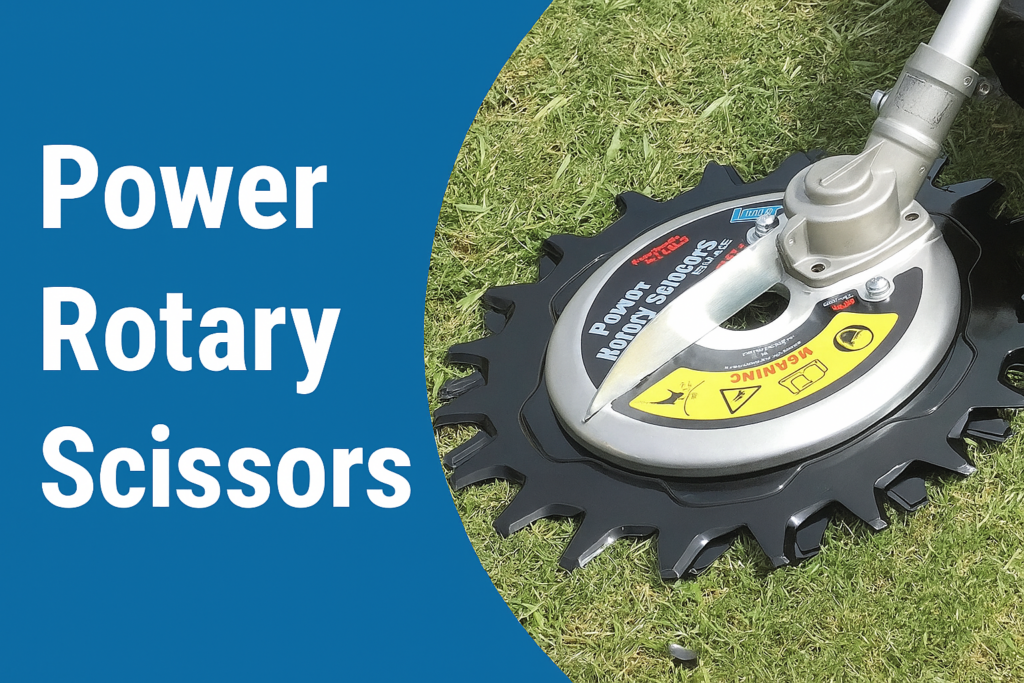
Are you tired of uneven edging, shredded grass near curbs, and endless trimmer line replacements? Meet the Power Rotary Scissors, a powerful attachment designed to supercharge your straight‑shaft trimmer or brush cutter. Unlike regular string‑based weedeaters, this ingenious tool delivers scissor‑style precision cuts, making your lawn trimming faster, safer, and far more refined. In this post, we’ll explore its benefits, how it differs from standard trimmers, installation tips, pricing, and even provide an Amazon link for purchase.
🏆 What Are Power Rotary Scissors?
The Power Rotary Scissors is a solid‑steel cutting head that replaces the usual nylon line on a straight‑shaft trimmer or brush cutter. Rather than spinning filament at high speed, it uses counter‑rotating metal blades to slice through grass, weeds, vines, and even thin brush. The blades rest on a bottom steel disk, which prevents turf scalping and protects surfaces. Once you release the throttle, the blades stop almost instantly—boosting safety for both you and your landscape.
Most kits come with adapter sleeves to fit common shaft sizes (24‑28 mm), making them compatible with many popular brands like Stihl, Echo, EGO, and Husqvarna.
The Key Benefits of Power Rotary Scissors
1. Precision Like You’ve Never Seen
Unlike string trimmers that shred grass unevenly, rotary scissors cut cleanly and evenly along edges, sidewalks, and beds. They make it easy to blend mower lines for a professional finish.
2. No More Flying Debris
Because the blades rotate against each other with a bottom guard, there’s minimal risk of throwing rocks, mulch, or sticks. This is a huge safety win for windows, cars, and bystanders.
3. Safe Around Pets, Plants, and Water
These scissors can even work in shallow water or around delicate flower beds without snagging or scalping.
4. Handles Tough Vegetation Easily
The geared blades produce high torque that slices through thick grass, ground cover, and vines with less effort than nylon string trimmers.
5. Durable and Sharpenable
Unlike string that constantly breaks, the metal blades are resharpenable and designed to last for many hours of use.
Rotary Scissors vs. Regular Weedeater
| Feature | Power Rotary Scissors | Traditional String Trimmer |
|---|---|---|
| Cutting Method | Scissor action (dual blades) | High‑speed nylon line |
| Precision | Clean, sharp edging | Jagged cuts, takes practice |
| Debris | Minimal flying objects | Rocks and grass can fly |
| Safety | Much safer near windows & people | Higher risk of property damage |
| Replacement | Sharpenable blades | Frequent line replacement |
| Cutting Surface Damage | Bottom disk prevents scalping | Can easily scalp turf |
| Water Use | Can cut in shallow water | Unsafe for wet trimming |
| Dense Weed Efficiency | Excellent | Moderate |
| Weight | Heavier (~4 lbs) | Lighter |
| Best Use | Detail edging, clean finish | Fast clearing of big areas |
Who Should Use Power Rotary Scissors?
- Homeowners who want perfect lawn edges and blended cuts.
- Landscapers performing precision detailing around beds, patios, and walkways.
- Anyone trimming near water or delicate plantings where flying debris is a risk.
- DIY lawn enthusiasts who are tired of replacing trimmer line constantly.
Not ideal for: clearing large overgrown fields quickly or users who want the lightest possible trimmer head.
Installation & Setup
- Check compatibility: Works on most straight-shaft trimmers with solid drive shafts (25 cc or larger).
- Remove the existing trimmer head by loosening the retaining nut.
- Install the rotary scissors using the correct adapter sleeve and tighten securely.
- Wear safety gear including gloves, hearing, and eye protection.
- Lubricate and sharpen the blades regularly for optimal performance.
Cost and Where to Buy
Most Power Rotary Scissors retail between $200 and $300 depending on the brand and size. A 9.5″ standard model is perfect for most residential and commercial edging.
If you’re ready to upgrade your lawn care game, here’s an Amazon link to purchase one:
Buy Power Rotary Scissors on Amazon
Maintenance Tips
- Sharpen blades every 10 hours of use or if cutting performance drops.
- Apply EP grease to the gear and shaft periodically.
- Check the mounting bolts and adapter fit before each use.
- Store in a dry area and clean off debris after every session.
Summary: Why Rotary Scissors Are a Game-Changer
- Precision and Cleanliness: Perfect edges without jagged string damage.
- Safety: Minimal debris and safe around windows, pets, and people.
- Durability: Sharpenable blades mean less frequent replacement parts.
- Versatility: Great for edging, aquatic trimming, and professional detailing.
If you want to turn ordinary trimming into professional-level landscaping, the Power Rotary Scissors is the ultimate upgrade. Add one to your toolkit and enjoy the cleanest edges your yard has ever seen.