
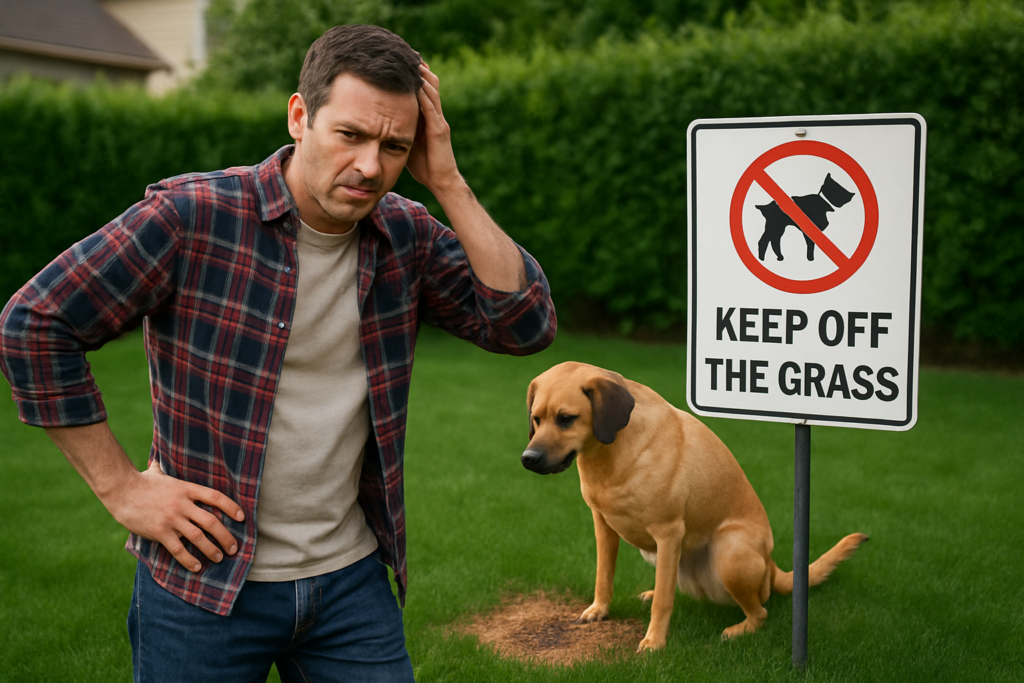
Maintaining a beautiful yard is a labor of love. From carefully mowing your lawn to fertilizing, watering, and keeping it free of weeds, your yard is often a reflection of your home and pride in your property.
But for many homeowners, there’s one frustrating problem that can undo all your hard work—neighborhood dog walkers using your lawn as their dog’s personal bathroom.
Dog pee burns your grass, dog poop leaves unsightly (and unsanitary) messes, and constant traffic can ruin the health of your yard. Worse yet, if you live in a neighborhood where people walk their pets frequently, your front lawn can quickly become a target zone for repeat offenders.
In this guide, we’ll cover:
- The damage dog pee and poop cause to your lawn
- Laws and regulations about dogs using other people’s yards
- Prevention strategies to keep your lawn healthy and dog-free
- Neighborly and legal ways to deal with repeat offenders
Why Dog Pee and Poop Damage Your Lawn
Before we dive into solutions, it helps to understand why dog waste is so damaging to grass.
1. Dog Pee Causes Lawn Burn
Dog urine is essentially high in nitrogen and salts. While nitrogen is actually a nutrient that lawns need, too much nitrogen in one concentrated spot acts like fertilizer burn.
- Symptoms of dog pee damage:
- Small round yellow or brown patches in the grass
- Green halo or ring around the dead spot
- Repeated damage in the same spot if dogs return to the area
Female dogs tend to cause more concentrated damage because they squat in one place, while male dogs often mark multiple spots in smaller amounts.
2. Dog Poop Isn’t Fertilizer
Some people mistakenly believe that dog poop is like cow manure or compost and is good for grass. That’s a myth.
- Dog poop is acidic and nutrient-heavy
- It can smother grass and promote fungus
- It breeds bacteria and parasites such as E. coli and roundworm
Not to mention—it’s just plain gross to find someone else’s pet waste in your yard, especially if kids play there.
3. Frequent Foot Traffic Compacts Soil
Even if a dog just walks across your lawn repeatedly without relieving itself, foot traffic compacts the soil. Compacted soil prevents grass roots from getting enough air, water, and nutrients. Over time, this leads to thin, unhealthy turf, making it even more vulnerable to damage from dog waste.
Are There Laws Against Dogs Using Your Yard as a Bathroom?
The short answer is: Yes, in most cities, dog owners are legally required to control their pet’s waste.
Here are the common regulations:
1. Pooper Scooper Laws
- Most cities and HOAs require pet owners to pick up after their dogs immediately.
- Failing to do so can result in fines ($50 to $500) depending on the city.
2. Trespassing and Leash Laws
- Dogs generally must remain on a leash on public property.
- Allowing a dog to enter private property without permission can be considered trespassing.
3. Nuisance or Property Damage Laws
- Damaging a neighbor’s property (like killing grass with dog urine) can fall under nuisance laws.
- Repeated offenses can give you grounds to file a formal complaint with local animal control or your HOA.
Tip: Check your local municipal code or HOA rules for specifics—they often back you up if you need to address repeat offenders.
How to Prevent Dogs From Using Your Lawn as a Bathroom
While laws exist, enforcement is often tricky. Most homeowners prefer prevention first. Here are proven ways to protect your lawn:
1. Install Subtle Barriers
- Short fencing or edging: Even a 12- to 18-inch decorative border discourages most casual dog walkers.
- Hedges or low shrubs: A natural barrier makes your lawn less accessible.
2. Use Dog Repellents
- Commercial sprays: Nature’s Mace Dog Repellent, Liquid Fence Dog & Cat Repellent
- DIY options: Citrus peels, vinegar solution, or light cayenne pepper (reapply after rain)
3. Install Motion-Activated Devices
- Motion-activated sprinklers: Spray water when motion is detected
- Ultrasonic repellents: Emit high-pitched sounds that dogs dislike
4. Lawn Care Practices to Mitigate Damage
- Water spots immediately to dilute urine
- Apply gypsum to neutralize salts
- Overseed thin areas to keep your lawn resilient
5. Communicate With Your Neighbors
Sometimes a polite conversation is the easiest solution. Show photos of damage, explain the problem, and suggest alternatives like using the street strip instead of your lawn.
6. Use Signage Wisely
Small “Please Curb Your Dog” or “Private Property – No Pet Bathroom” signs serve as visual reminders. Combine with cameras or sprinklers for better deterrence.
How to Handle Repeat Offenders
If one neighbor’s dog continues to damage your lawn, it’s time to document and escalate:
- Install Security Cameras: Doorbell or yard cameras capture proof for complaints.
- Send a Friendly but Firm Note: Be polite but clear, and reference local ordinances.
- Contact Animal Control or HOA: Provide evidence and request formal action.
Important: Avoid unsafe barriers or chemical retaliation—they can create legal trouble.
Protecting Your Lawn Long-Term
1. Fixing Dog Pee Spots
- Rake and remove dead grass
- Apply gypsum or lime to neutralize urine
- Overseed with fresh grass seed
- Water deeply until grass recovers
2. Sanitizing After Dog Poop
- Use a scoop or shovel to remove waste
- Hose down the area to dilute residue
- Apply pet-safe disinfectant to reduce bacteria
3. Strengthen Your Lawn Overall
- Fertilize appropriately without overloading nitrogen
- Aerate annually to prevent soil compaction
- Use resilient grass types like Bermuda or Fescue
Final Thoughts
A beautiful lawn requires hard work and consistent care—but nothing can ruin it faster than unwanted dog traffic and waste.
By understanding the damage dog urine and poop cause, knowing your local laws, and using a mix of preventive and repair strategies, you can protect your lawn and keep it looking its best without unnecessary neighbor drama.
With the right approach, your yard can go back to being your peaceful green oasis instead of the neighborhood dog park.