
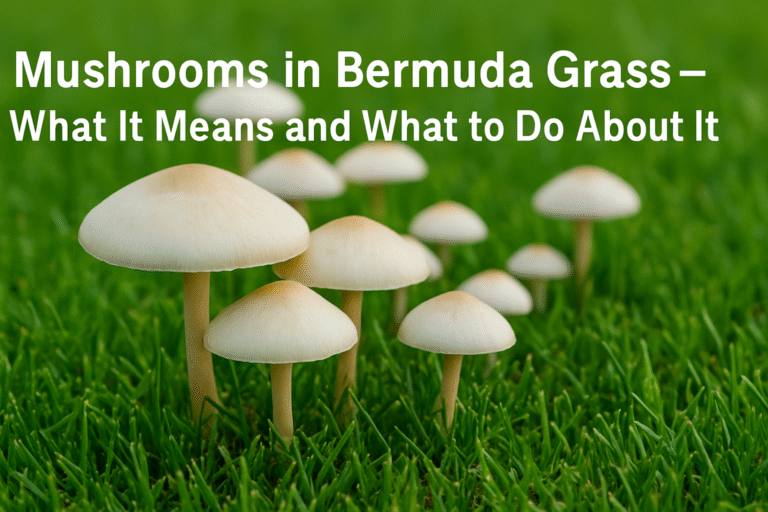
If you’ve stepped outside and noticed small clusters of mushrooms popping up in your Bermuda grass, you might be wondering: Is this bad for my lawn? Should I pull them up? Will they hurt my grass?
The truth is, mushrooms in your lawn aren’t always a bad sign. In fact, they often tell you something positive about your soil. But there are also times when you may want to take action. Let’s break it down.
Why Mushrooms Grow in Bermuda Grass
Mushrooms are a natural part of the ecosystem. They’re the fruiting bodies of fungi living in your soil, and they appear when conditions are just right — usually after periods of moisture, warm temperatures, and high humidity.
Some of the most common reasons mushrooms grow in Bermuda lawns include:
- Organic matter in the soil – Mushrooms feed on decaying plant material like old roots, buried wood, and grass clippings.
- Recent rainfall or irrigation – Mushrooms thrive in moist environments, so heavy rain or overwatering can cause a sudden outbreak.
- Healthy soil activity – A robust fungal presence means your soil is alive and working to break down organic matter, releasing nutrients for your grass.
Are Mushrooms a Bad Sign for Bermuda Grass?
In most cases, mushrooms are not a sign of disease or a threat to your Bermuda grass. In fact, their presence often indicates:
- Healthy soil biology – Mushrooms are part of a balanced lawn ecosystem.
- Good nutrient cycling – The fungi help decompose organic matter, releasing nitrogen and other nutrients your Bermuda grass needs.
However, there are a few scenarios where mushrooms can signal issues:
- Excess moisture – Consistently wet soil can promote fungal overgrowth and root problems.
- Poor drainage – Water pooling in certain areas can lead to mushrooms and turf stress.
- Buried debris – Old wood or roots under the lawn can become long-term mushroom food sources.
The Benefits of Mushrooms in Your Bermuda Grass
You might be surprised, but mushrooms actually bring some perks to your lawn:
- Natural fertilization – As fungi break down organic matter, they release nutrients your grass can use.
- Improved soil structure – Fungal networks (mycelium) help soil retain moisture and promote root health.
- Biodiversity – A diverse lawn ecosystem can make your turf more resilient against pests and diseases.
Think of mushrooms as nature’s recyclers — they turn old, dead material into life-giving nutrients for your Bermuda grass.
Should You Remove Mushrooms from Your Lawn?
Removing mushrooms is more about personal preference and safety than lawn health. They won’t harm your Bermuda grass directly, but you might want to remove them if:
- You have pets or young children (some mushrooms are toxic if eaten).
- You don’t like the look of them.
- They’re spreading heavily in one area.
How to remove mushrooms:
- Wear gloves and pick them by hand, or use a small rake.
- Dispose of them in the trash — not the compost pile — to avoid spreading spores.
Will Mushrooms Damage My Bermuda Grass?
No — mushrooms themselves won’t damage your Bermuda grass. The underlying fungus lives in harmony with your lawn, often improving soil health.
The only risk is if mushrooms are a symptom of overly wet soil, which can stress Bermuda grass roots and promote turf diseases. If mushrooms appear after every watering, it might be time to adjust your irrigation schedule.
How to Reduce or Prevent Mushrooms
If you’d prefer to keep mushrooms to a minimum, try these tips:
- Adjust watering – Bermuda grass likes deep, infrequent watering. Avoid daily shallow watering.
- Improve drainage – Aerate compacted soil and address low spots where water collects.
- Remove organic debris – Rake up clippings, leaves, and old mulch.
- Dethatch when needed – Thick thatch layers can trap moisture and encourage fungi.
- Sunlight exposure – Trim overhanging tree branches to allow more sunlight to reach damp areas.
Final Thoughts
Mushrooms in your Bermuda grass are usually a sign of healthy soil, not a problem. They’re part of nature’s recycling team, breaking down organic matter and enriching your lawn.
However, if you dislike their appearance or have safety concerns, you can remove them and reduce the conditions that make them thrive.
In short — don’t panic when you see mushrooms. In many cases, it means your Bermuda grass is growing in a thriving, living ecosystem.
Pro Tip: If you ever notice mushrooms accompanied by yellowing or thinning grass, that could be a sign of excessive moisture or lawn disease. In that case, check your watering schedule and consider a soil test.