
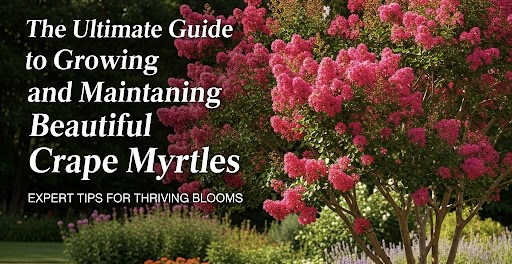
Crape Myrtles are some of the most beloved ornamental trees and shrubs for Southern and warm-climate landscapes. Known for their vibrant blooms, graceful bark, and long summer color, these plants can transform any yard into a colorful retreat.
If you’ve ever admired a row of pink, red, purple, or white flowering trees in the summer heat, you’ve probably been enjoying Crape Myrtles. This guide will cover the different types, bloom times, essential maintenance tips, and how to protect them from fungus and insects—including the notorious Cercospora leaf spot.
Types of Crape Myrtles
Crape Myrtles (Lagerstroemia indica and hybrids) come in a variety of sizes, colors, and growth habits, making it easy to find the perfect type for your yard.
- Dwarf Varieties
- Height: 2–5 feet
- Perfect for containers, borders, or small landscapes.
- Popular Varieties: Pocomoke, Berry Dazzle, Chickasaw
- Medium-Sized Varieties
- Height: 6–15 feet
- Great for small trees or large shrubs; ideal for privacy screens or driveway borders.
- Popular Varieties: Tonto, Sioux, Hopi
- Tree-Form or Tall Varieties
- Height: 15–30 feet
- Stunning as standalone yard trees or street plantings.
- Popular Varieties: Natchez (white), Tuscarora (coral-pink), Muskogee (lavender)
When Do Crape Myrtles Bloom?
One of the reasons Crape Myrtles are so popular is their long bloom period, often lasting 90–120 days in summer.
- Early Bloomers (June–July): Sioux, Natchez
- Mid-Summer Bloomers (July–August): Tuscarora, Muskogee
- Late Bloomers (August–September): Tonto, Dynamite
Pro Tip: Regular deadheading (removing spent flowers) can encourage a second wave of blooms in many varieties.
Maintenance Tips for Healthy Crape Myrtles
Crape Myrtles are low-maintenance, but they still need the right care to thrive.
1. Pruning the Right Way
- Avoid “Crape Murder,” the harsh cutting back that ruins their natural shape.
- Only remove crossing branches, dead wood, or suckers at the base.
- Best Time to Prune: Late winter to very early spring, before new growth starts.
2. Watering and Feeding
- Water young trees once or twice per week during dry spells.
- Apply a balanced slow-release fertilizer in spring for the best blooms.
Recommended Product:
Osmocote Smart-Release Plant Food
Protecting Crape Myrtles from Fungus
One of the most common fungal issues is Cercospora leaf spot, which causes yellowing leaves and premature leaf drop in late summer.
Signs of Cercospora Leaf Spot
- Yellow or orange spotting on leaves
- Early leaf drop, often starting from the bottom of the tree upward
How to Prevent and Treat Fungus
- Plant in Full Sun – Shade encourages fungal growth.
- Water at the Base – Avoid wetting leaves.
- Use Fungicide Early in the Season if you notice early spots.
Suggested Fungicide Products:
BioAdvanced 12 Month Tree Protect & Feed Concentrate
Southern Ag Liquid Copper Fungicide
Controlling Insects on Crape Myrtles
Crape Myrtles are generally pest-resistant, but a few insects can cause issues:
- Aphids – Cause sticky honeydew and black sooty mold.
- Crape Myrtle Bark Scale (CMBS) – Causes white, waxy buildup on branches.
Best Practices for Insect Control
- Blast Aphids Off with Water – Often all that’s needed for minor infestations.
- Apply Horticultural Oil or Neem Oil in spring to suffocate overwintering insects.
- Use Systemic Insecticides if infestations are heavy.
Suggested Insect Control Products:
Trifecta Crop Control Ready to Use Maximum Strength Natural Pesticide
Summary: Thriving Crape Myrtles All Season
Crape Myrtles are low-maintenance, long-blooming trees that can bring spectacular summer color to your landscape. By:
- Choosing the right type for your yard
- Pruning and watering correctly
- Protecting from fungus and insects
…you can enjoy a healthy, vibrant display year after year.
If you see yellowing leaves with spots, don’t panic—it’s often Cercospora leaf spot, and with the right fungicide and care, your tree will bounce back beautifully.