
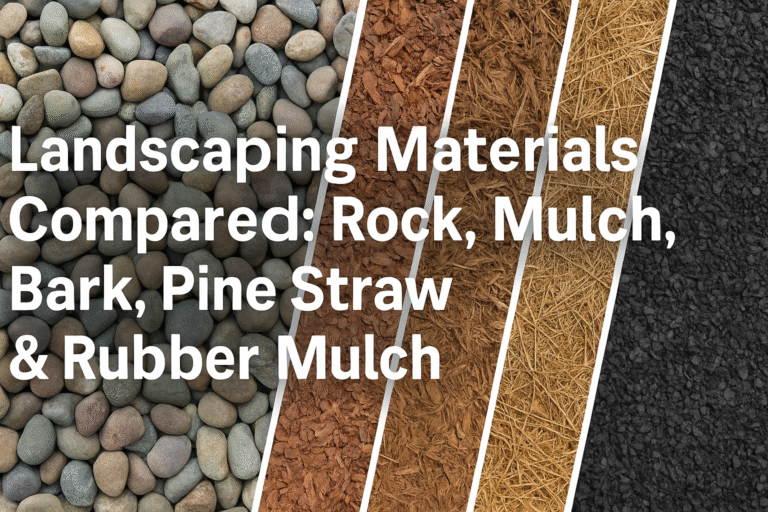
Choosing the right landscaping material can make or break the look, feel, and health of your yard. Whether you’re a homeowner doing a full landscape makeover or just refreshing your flowerbeds, understanding the pros and cons of materials like rock, wood mulch, bark, pine straw, and rubber mulch is critical to success. Each material offers unique benefits — and some drawbacks — when it comes to cost, durability, appearance, plant health, and weed control.
This guide will help you choose the best material for your landscaping goals and budget. Let’s dive into a comprehensive breakdown of each popular option.
1. Landscaping Rock
✅ Benefits of Landscaping Rock
- Extremely Durable: Rock doesn’t break down over time, making it a long-lasting material that won’t need frequent replacement.
- Excellent for Weed Control: When paired with landscape fabric, rock does a solid job of suppressing weeds.
- Low Maintenance: Unlike organic options, rock doesn’t need to be replaced every year and doesn’t attract pests or mold.
- Modern Look: Decorative gravel and river rock offer a clean, modern, or desert-like aesthetic depending on the type used.
❌ Disadvantages of Landscaping Rock
- High Upfront Cost: Rock is more expensive initially than organic materials. Installation costs are also higher due to labor intensity.
- Retains Heat: Especially in full sun, rocks can radiate heat that may stress plants and dry out the soil.
- Not Ideal for Plant Growth: Because it doesn’t enrich the soil, rock doesn’t support healthy plant development.
💰 Cost Estimate:
$50–$100 per ton, or around $1.00–$3.00 per square foot installed.
🌿 Best Uses:
Dry climates, modern homes, xeriscaping, or areas with little plant growth like walkways and driveways.
2. Wood Mulch
✅ Benefits of Wood Mulch
- Improves Soil Health: As it decomposes, it adds organic matter to the soil, improving fertility and structure.
- Moisture Retention: Wood mulch helps the soil retain moisture, reducing watering needs for your plants.
- Affordable: Readily available and inexpensive, especially if you buy in bulk or get it from local tree trimming companies.
- Natural Look: Wood mulch has a classic, earthy aesthetic that complements most homes and gardens.
❌ Disadvantages of Wood Mulch
- Breaks Down Quickly: Needs to be replenished annually or biannually, increasing long-term costs and labor.
- Can Attract Pests: Termites and other insects may be drawn to wood mulch, especially near the home’s foundation.
- Color Fading: Dyed mulches fade quickly in sun exposure.
💰 Cost Estimate:
$2–$5 per bag or $25–$45 per cubic yard (bulk).
🌿 Best Uses:
Garden beds, vegetable patches, flower beds, and around trees and shrubs where soil health is a priority.
3. Bark Mulch
✅ Benefits of Bark Mulch
- Natural Appearance: Bark creates a rustic, well-groomed look that blends seamlessly with trees and wooded landscapes.
- Soil Enrichment: Like wood mulch, bark breaks down and adds nutrients back into the soil.
- Moisture and Temperature Control: Protects plant roots from extreme temperature fluctuations and retains moisture efficiently.
❌ Disadvantages of Bark Mulch
- Lightweight: Can be washed away in heavy rain or blown around by the wind if not properly settled.
- Decomposes Quickly: Needs replacement every year or two.
💰 Cost Estimate:
$3–$7 per bag or $30–$60 per cubic yard.
🌿 Best Uses:
Shaded flower beds, ornamental gardens, and woodland areas. Ideal for areas with many trees where it enhances the natural look.
4. Pine Straw
✅ Benefits of Pine Straw
- Easy to Spread: Lightweight and quick to install without heavy equipment.
- Great for Acid-Loving Plants: Slowly releases acidity into the soil, which is beneficial for azaleas, blueberries, and hydrangeas.
- Natural, Southern Look: Offers a soft, finished look that’s especially popular in southern landscapes.
- Cost-Effective: Cheaper than most mulching materials when bought in bales.
❌ Disadvantages of Pine Straw
- Flammable: More likely to catch fire than other options, so not ideal in wildfire-prone areas.
- Needs Frequent Refreshing: Breaks down quickly and loses color, requiring regular touch-ups every 6–12 months.
- Less Effective at Weed Control: Thinner coverage can allow some weed growth unless layered thickly.
💰 Cost Estimate:
$4–$7 per bale. Each bale covers approximately 35–50 square feet.
🌿 Best Uses:
Garden beds, pathways, and around trees, especially where acidic soil is beneficial.
5. Rubber Mulch
✅ Benefits of Rubber Mulch
- Extremely Durable: Doesn’t decompose or fade, lasting for years without needing replacement.
- Superior Weed Control: Offers excellent coverage and doesn’t promote weed growth.
- Shock Absorbent: Often used in playgrounds and pet areas for safety due to its cushioning effect.
- Color Retention: Available in multiple colors that resist fading in the sun.
❌ Disadvantages of Rubber Mulch
- Expensive: Higher upfront costs than most other mulch types.
- No Soil Benefits: Doesn’t improve soil health or structure, as it’s non-organic.
- Potential Chemical Leaching: Some studies suggest rubber may release chemicals over time, affecting soil and water.
💰 Cost Estimate:
$6–$12 per bag or $80–$120 per cubic yard.
🌿 Best Uses:
Playgrounds, pet areas, high-traffic paths, or beds where long-term durability outweighs soil health needs.
Comparison Table: At a Glance
| Material | Cost | Durability | Soil Health | Weed Control | Aesthetics |
|---|---|---|---|---|---|
| Rock | High | Very High | Low | Good | Modern/Clean |
| Wood Mulch | Low | Low | Excellent | Good | Natural/Woodsy |
| Bark | Medium | Medium | Good | Moderate | Rustic |
| Pine Straw | Low | Low | Moderate | Low | Soft/Natural |
| Rubber Mulch | High | Very High | None | Excellent | Colorful/Modern |
Final Verdict: Which Is Best for You?
- Best for Budget: Pine straw or bulk wood mulch
- Best for Long-Term Value: Rock or rubber mulch
- Best for Plant Health: Bark or wood mulch
- Best for Weed Control: Rubber mulch or rock (with landscape fabric)
- Best Appearance: Depends on the style of your home — bark and wood mulch are natural and versatile, rock is sleek and modern, while pine straw offers a Southern charm.
Ultimately, the right material depends on your landscape goals. Mixing materials is also an option. For instance, use wood mulch in your garden beds and decorative gravel for walkways. Just make sure it all works together visually and functionally.