
A perfectly smooth lawn is more than just eye candy—it makes mowing easier, improves grass health, and prevents water pooling.
If your yard is full of bumps, dips, or uneven spots, sand leveling—also known as lawn topdressing—is one of the best DIY ways to fix it.
This guide will teach you everything you need to know about sand leveling your yard, including:
- The step‑by‑step process to level your yard
- When to do it and how often
- Which type of sand to use
- Cost and DIY vs. professional breakdowns
- Top recommended tools, including Amazon affiliate picks
Whether you have a bumpy Bermuda grass lawn or a cool‑season grass yard, learning to sand level can completely transform your landscape—and save you thousands compared to hiring a pro.
What is Sand Leveling?
Sand leveling, also called topdressing, is the process of spreading a thin, even layer of sand—or a sand‑soil mix—over your lawn to smooth out uneven surfaces. Over time, most lawns develop:
- Low spots caused by soil settling
- Bumps from tree roots, ant mounds, or debris
- Water pooling areas from poor drainage
- General unevenness caused by foot traffic, pets, or mowing
Sand fills these low spots and helps create a smooth, uniform surface. Over a few weeks, grass grows through the sand layer and recovers with an even, professional‑looking finish.
Golf courses, sports fields, and professional landscapes use sand leveling regularly to maintain perfect turf conditions. Homeowners can achieve the same results without heavy machinery.
When Should You Sand Level Your Yard?
Timing is everything in lawn care. Sand leveling works best when your grass is actively growing, so it can recover quickly and fill in the sanded areas.
Best Timing by Grass Type
- Warm‑season grasses (Bermuda, Zoysia, St. Augustine): Late spring to mid‑summer, once the lawn is green and growing vigorously.
- Cool‑season grasses (Fescue, Kentucky bluegrass, Ryegrass): Early fall or late spring, avoiding summer heat stress.
Avoid winter or dormant periods. Leveling a dormant lawn can smother grass and slow recovery.
Signs Your Lawn is Ready for Leveling
- Your mower frequently scalps high spots
- Water pools after rain or irrigation
- The lawn feels bumpy when walking barefoot
- Grass growth looks uneven or patchy
Benefits of Sand Leveling Your Yard
Sand leveling offers immediate and long‑term benefits that go beyond aesthetics:
- Smoother mowing: Prevents mower scalping and reduces wear on equipment.
- Improved drainage: Reduces puddles and waterlogging in low spots.
- Healthier grass: Encourages even growth and better root contact with soil.
- Reduced trip hazards: Creates a safer yard for kids, pets, and foot traffic.
- Better curb appeal: A flat, professional‑looking lawn adds to your property value.
- Long‑lasting results: Sand does not decompose, so once your lawn is leveled, it stays smoother over time.
Tools You’ll Need
You can sand level your lawn with basic tools, but having the right equipment makes the job faster and easier.
Here’s the essential DIY leveling toolkit:
- Wheelbarrow or buckets – to transport sand
- Shovel – for filling low spots
- Leveling rake or lawn lute – for spreading and smoothing sand evenly
- Push broom – to work sand into grass blades
- Lawn roller (optional) – to compact sand and create a perfectly smooth finish
Below, we’ve included three recommended Amazon tools that make leveling much easier.
Recommended Amazon Tools for Lawn Leveling
Using high‑quality tools saves time and produces a more professional finish. Here are three top picks with your affiliate code ready to use:
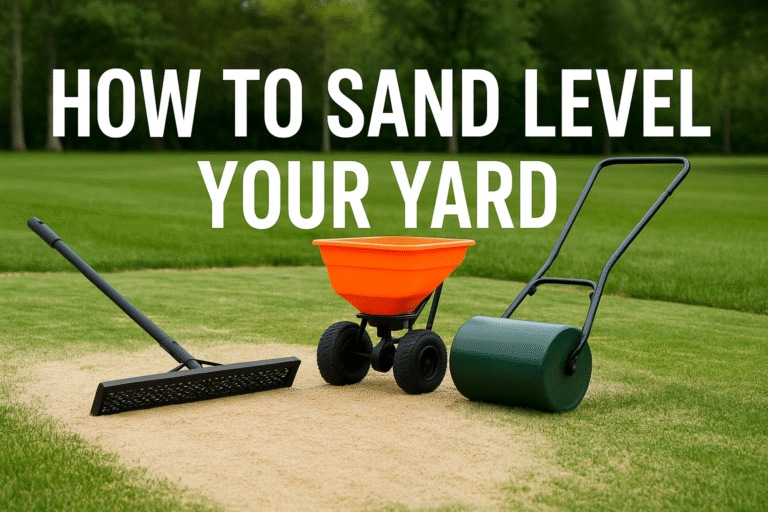
1. Heavy‑Duty Lawn Leveling Rake
A lawn leveling rake is a must‑have for spreading sand smoothly. Its wide, flat head helps feather out sand without gouging the grass.
2. Broadcast Spreader
A broadcast spreader helps distribute sand or sand‑soil mix more evenly across larger areas. It’s also perfect for fertilizer and seed applications year‑round.
3. Lawn Roller
A lawn roller helps compact sand and smooth your surface after spreading. It also assists in pressing grass roots back into soil contact.
Tip: If your lawn is small, you can get away without the roller. For larger lawns, it makes a big difference.
Types of Sand You Can Use
Not all sand is created equal. The right sand improves drainage and levels the lawn without compacting your soil.
Here are the best options:
- Washed Masonry Sand: Fine, clean sand that blends with soil. Most recommended for homeowners.
- USGA Golf Course Sand: Consistent particle size and great for drainage, though pricier.
- Sand/Compost Mix: 70% sand and 30% compost adds organic matter to your lawn while leveling.
Avoid play sand or construction sand—they’re often too fine or contain debris, which can lead to compaction and poor drainage.
Step‑by‑Step: How to Sand Level Your Lawn
Leveling your yard can be a satisfying weekend project. Follow these steps for the best results:
- Mow your lawn short. Trim grass 30–50% lower than usual to expose bumps and low spots.
- Dethatch or aerate. If you have a heavy thatch layer, remove it so sand can reach the soil.
- Identify low spots. Walk the yard or use a straight board to see dips.
- Apply sand or topdressing mix. Focus first on the lowest areas.
- Spread evenly with your leveling rake. Feather edges to blend smoothly with existing grass.
- Brush or drag sand into grass. A push broom or drag mat works well.
- Water lightly. Helps sand settle without washing it away.
- Repeat lightly if needed. Multiple thin layers are better than one heavy application.
Cost of Sand Leveling
The cost of sand leveling depends on your yard size, sand type, and whether you hire a professional.
DIY Cost Breakdown
- Sand: $40–$80 per cubic yard (covers ~1,000 sq. ft. at ¼” depth)
- Tool rental: $20–$50/day for a roller or leveling rake
- Total for small lawn (1,000–2,000 sq. ft.): $100–$300
Professional Service Costs
Hiring a pro can cost $1,000–$3,000+ depending on yard size. DIY is a fraction of the price.
Cost Benefit: Doing it yourself with $200 of materials can save thousands—and the tools can be reused yearly.
Final Tips for Success
- Apply sand in thin layers to avoid smothering grass.
- Level in growing season for quick recovery.
- Use clean, washed sand to prevent weed contamination.
- Water lightly after each application to help sand settle.
In 2–4 weeks, your lawn will start to show results: smoother mowing, healthier grass, and a professional look right at home.